Vai al contenuto
iCrewPlay.com Un progetto editoriale indipendente
Continua con Notizia

NASA sospende Gateway: focus sulla base lunare

La NASA cambia piano: addio Gateway, ora punta tutto sulla Luna

Polvere stellare
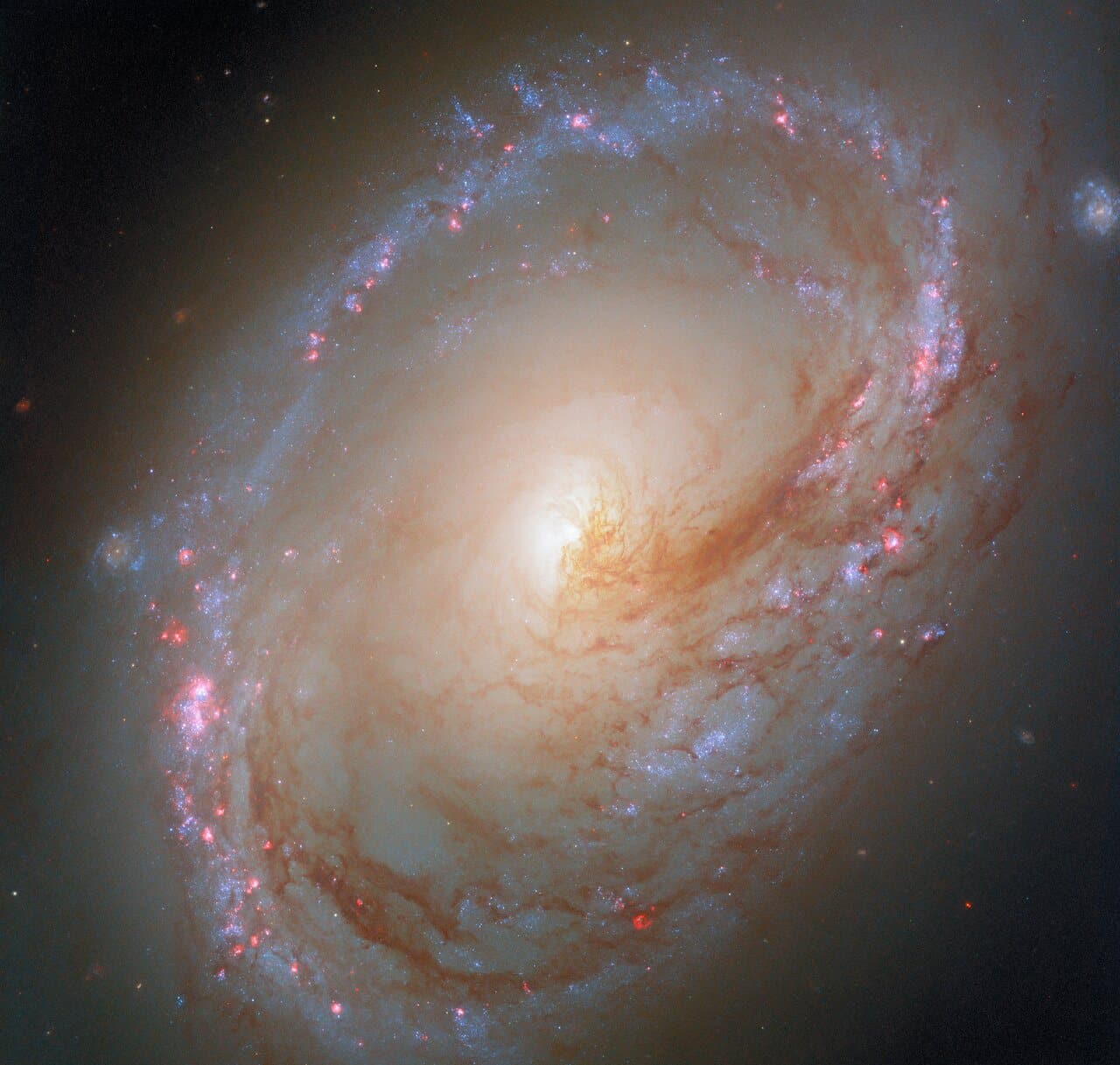
Today’s NASA/ESA Hubble Space Telescope Picture of the Week features a galaxy whose asymmetric appearance may be the result of a galactic tug of war. Located 35 million light-years away in the constellation Leo, the spiral galaxy Messier 96 is the brightest of the galaxies in its group. The gravitational pull of its galactic neighbours may be responsible for Messier 96’s uneven distribution of gas and dust, asymmetric spiral arms, and off-centre galactic core.  This asymmetric appearance is on full display in a new Hubble image, which incorporates observations made in ultraviolet and optical light. Hubble images of Messier 96 have been released previously in 2015 and 2018. Each successive image has added new data, building up a beautiful and scientifically valuable view of the galaxy. This third version gives an entirely new perspective on Messier 96’s star formation. The bubbles of pink gas in this image surround hot, young, massive stars, illuminating a ring of star formation in the outskirts of the galaxy. These young stars are still embedded within the clouds of gas from which they were born. The new data included for the first time in this image will be used to study how stars are born within giant dusty gas clouds, how dust filters starlight, and how stars affect their environments. [Image Description: A spiral galaxy, tilted nearly face-on to us, with a slightly unusual shape. Its spiral arms form an oval-shaped ring around the galaxy’s disc, filled with blue light from stars, as well as pink glowing gas bubbles where new stars are forming. Threads of dark red dust swirl around the brightly glowing core, blocking some of its light. The dust lanes extend into and follow the spiral arms.] Links Pan: Messier 96
Tempo di lettura1 minuto
Commenta

La NASA ha deciso di sospendere il progetto della stazione orbitante Gateway per concentrarsi su un obiettivo più ambizioso: costruire una base lunare permanente.

La scelta rientra in una nuova strategia che punta a garantire una presenza umana stabile sulla Luna nei prossimi anni.

Base lunare in tre fasi: il nuovo piano

Nasa

Il programma sarà sviluppato in tre step:

Pubblicità
  • Prima fase: test e sperimentazione con rover e missioni robotiche
  • Seconda fase: infrastrutture semi-abitabili e logistica regolare
  • Terza fase: presenza umana continua sulla Luna

Già dal 2027 sono previsti fino a 30 atterraggi robotici, per accelerare ricerca e sviluppo.

Un ruolo chiave sarà svolto anche dall’Italia, con gli habitat dell’Agenzia Spaziale Italiana.

Gateway sospeso ma non abbandonato

Il progetto Gateway non viene cancellato del tutto, ma messo in pausa.

La NASA ha confermato che parte delle tecnologie già sviluppate verranno riutilizzate nella nuova strategia, insieme al supporto dei partner internazionali.

Obiettivo Marte: arriva la propulsione nucleare

Parallelamente, la NASA punta anche su Marte.

Entro il 2028 è previsto il lancio di Space Reactor-1 Freedom, un veicolo a propulsione nucleare progettato per missioni nello spazio profondo.

A bordo ci saranno droni simili a Ingenuity, pensati per continuare l’esplorazione del pianeta rosso.

Secondo te è giusto abbandonare Gateway per puntare tutto sulla Luna? Scrivilo nei commenti e seguici su Instagram

La tua opinione in un clic

Cosa ne pensi?

La sala è aperta

Entra nella conversazione

Condividi il tuo punto di vista: non serve creare un account. I contributi restano soggetti alla moderazione editoriale.

Traguardo della community0 / 5
Mancano 5 interventi al prossimo traguardo.

Aggiungi la tua voce

Partecipazione libera: inserisci i dati richiesti e pubblica senza registrarti.